
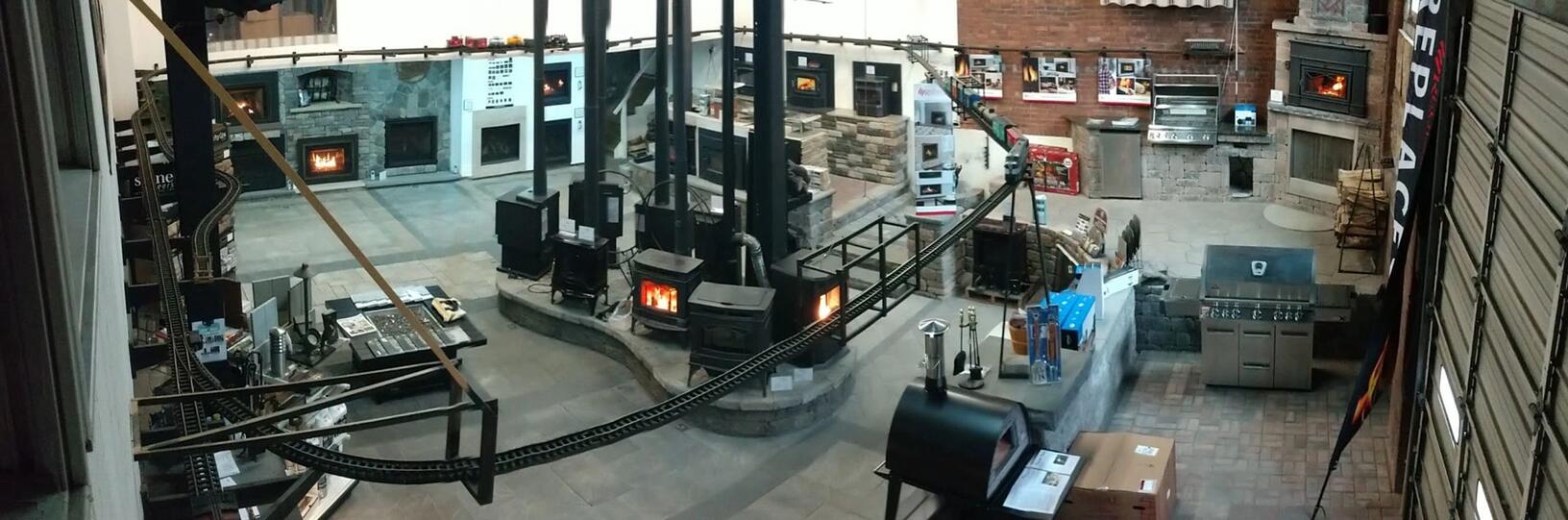
Fireplace vs. Fireplace Insert

What’s the Real Difference in Efficiency?
When homeowners think about a fireplace, they picture warmth, comfort, and energy savings.
But here’s something many people don’t realize:
A traditional open fireplace is one of the least efficient ways to heat your home.
If you’re looking to improve comfort and reduce heating costs, understanding the difference between a fireplace and a wood stove or fireplace insert is essential.
How Efficient Is a Traditional Open Fireplace?
A standard masonry fireplace may look beautiful, but from a heating perspective, it’s highly inefficient.
On Average:
- 70–80% of the heat goes straight up the chimney
- Only 20–30% of the heat stays in the home
- Efficiency ratings often range between 10–20%
In addition, open fireplaces can create negative air pressure. As warm air rises and exits the chimney, it pulls heated indoor air with it — which may cause your furnace to run more frequently.
That means your fireplace may actually increase overall heating demand instead of reducing it.
How a Wood Stove or Fireplace Insert Changes Everything
A wood stove or fireplace insert is designed to do what an open fireplace cannot — capture and distribute heat efficiently. These systems use controlled combustion technology, sealed chambers, and airflow management to maximize heat output.
Average Efficiency:
- 75–80% of heat stays inside the home
- Only about 20% is lost up the chimney
That’s essentially the reverse of a traditional fireplace.
Fireplace vs. Fireplace Insert
What Is a Fireplace Insert?
A fireplace insert is a self-contained heating unit that fits directly inside your existing fireplace opening.
Leading manufacturers such as:
- Napoleon
- Regency
produce high-efficiency inserts designed to:
- Increase heat output
- Reduce wood consumption
- Improve combustion efficiency
- Circulate warm air into living spaces
- Lower emissions compared to open fireplaces
In many homes, a fireplace insert transforms a decorative feature into a true primary or supplemental heat source.
Real-World Research Supports the Difference
Research published through ScienceDirect found that homes with fireplaces used significantly more heating energy during winter compared to homes without fireplaces — even after adjusting for home size and heating system differences.
This highlights an important reality:
Open fireplaces are often heat loss systems, not heat gain systems. By contrast, high-efficiency inserts and wood stoves are engineered to retain and distribute heat effectively.